


ERV Air Exchange Systems
in Sanford, Maine
Professional ERV installation for Sanford homes and businesses, backed by Efficiency Maine rebate assistance and 30+ years of experience.
- Google reviews
- Licensed & Insured
- 30+ Years Experience
- Efficiency Maine Registered Vendor
- Free Estimates
How an Energy Recovery Ventilator Works
- Stale air in — pulled from the house before it is exhausted
- Core — the two air streams cross without mixing, and heat transfers between them
- Exhaust — stale, spent air is pushed outside
- Fresh air intake — outdoor air is drawn in and pre-tempered by the core
- Supply — fresh, filtered air is delivered back into the house
An energy recovery ventilator (ERV) brings continuous fresh, filtered outdoor air into a Sanford home while recovering up to 80% of the energy that would otherwise be lost through an open window. We install ERVs throughout York County, most often alongside a heat pump system in newer or recently tightened homes that need mechanical ventilation to meet code.
Newer construction in Springvale and downtown Sanford and other tightly sealed Sanford homes are exactly where an ERV earns its keep, since modern building codes limit air leakage tightly enough that natural infiltration alone often isn't enough for healthy indoor air. An ERV solves that without wasting the heating or cooling you have already paid for.
Looking for the full picture? Explore all of our heat pump services in Sanford, learn more about erv air exchange system installation, or call (207) 317-1077 to schedule a free in-home estimate.
ERVs for Sanford's Newer, Tighter Homes and Renovated Mill Units
An energy recovery ventilator pairs naturally with a heat pump system: it brings in continuous fresh, filtered outdoor air while recovering up to about 80% of the heating or cooling energy that would otherwise be lost by just cracking a window or running a bath fan. That matters more in some Sanford homes than others — the roughly two-thirds of the city's housing built since 1960, and especially anything built or substantially renovated more recently, tends to be tighter and better air-sealed than the mill-era housing near downtown, which means it needs a deliberate source of fresh air rather than relying on natural leakage the way an old drafty farmhouse does.
Maine's building code — the Uniform Building and Energy Code, adopted through the 2021 IECC and IMC along with 2019 ASHRAE ventilation standards — caps whole-building air leakage at 3 air changes per hour at 50 pascals for new construction statewide, a threshold tight enough that mechanical ventilation, not just natural infiltration, is generally required to meet code-required fresh-air rates. Any new Sanford home built to that standard, or an older home renovated aggressively enough to trigger it, is a strong candidate for an ERV rather than a retrofit afterthought.
Converted mill-era apartments in downtown Sanford present an interesting version of this same question: a unit that's been gutted and rebuilt with modern insulation and tight windows can end up just as sealed as new construction, even though the building itself dates to the Goodall Mills era, which means the ventilation need doesn't track neatly with a building's age on paper. We evaluate air-tightness on its own terms rather than assuming an older building automatically breathes enough on its own.
Installing an ERV means running a dedicated electrical circuit for the unit, which requires the same electrical permit as any other permanently wired mechanical equipment — in Sanford, that goes through the city's own Electrical Inspector at the Code Enforcement Office rather than a state inspector's schedule. We size and duct an ERV to actually reach the rooms that need fresh air, not just the mechanical room it sits in, and we pair the installation with whatever heat pump work a homeowner is already planning so the two systems are commissioned together rather than as separate afterthoughts. Learn more on our ERV and air exchange systems page.
Sources: U.S. Census Bureau, American Community Survey 2020–2024 5-year estimates (Table B25040, Sanford); Sanford, Maine (Wikipedia); Sanford Water District; Sanford Water District consumer confidence data (TapWaterData); Sanford Sewerage District, treatment facility; City of Sanford, Code Enforcement Office; Sanford Code Enforcement (Chamber of Commerce business directory listing); Unitil, electric & gas service areas; Central Maine Power, service area; Central Maine Power service-area confirmation (FindEnergy); Maine Department of Environmental Protection, Shoreland Zoning.
ERV Air Exchange Systems Codes & Permits in Sanford
What Maine law and Sanford's own code office require before any work begins.
Permitting authority
Electrical inspection & utility
Sanford's Code Enforcement Office keeps a dedicated Electrical Inspector position on staff. Electric service runs on Central Maine Power (CMP).
Refrigerant rules
EPA Section 608 of the Clean Air Act (40 CFR Part 82, Subpart F) prohibits intentionally venting refrigerant while installing, maintaining, servicing, repairing or disposing of heat pump or air-conditioning equipment, and requires technicians who handle refrigerant to hold Section 608 certification.
Ventilation code
The 2021 IECC (adopted by MUBEC) caps whole-building air leakage at 3 air changes per hour at 50 pascals for climate zones 3-8 — Maine sits entirely within zones 5-7 — tested via a blower-door test. Combined with ASHRAE 62.2's mechanical ventilation requirement for new construction, this is why many new Maine homes need a dedicated ERV or HRV for code-required fresh air.
What erv air exchange systems specifically requires
- MUBEC's adoption of the 2021 IECC/IMC and 2019 ASHRAE 62.2 means new, tightly sealed Maine homes built to the 3 ACH50 blower-door limit generally need a mechanical ventilation system, commonly an ERV or HRV, to meet code-required whole-house fresh-air rates.
- An ERV or HRV's dedicated circuit is subject to the same general electrical-permit rule as any other permanently wired mechanical equipment in Maine.
How Southern Maine Heat Pumps Handles It
An ERV needs its own dedicated circuit just like a heat pump, so on every Sanford installation we schedule the inspection with Sanford Code Enforcement Office ourselves. We size the unit to the home's tightness and square footage so it clears the ventilation rates Maine's energy code expects from newer construction.
Google Street View — Main Street, Springvale
Sanford at a Glance
Mixed 1940s-1980s housing
Primary heating fuel (ACS 2020-2024)
Oil is still the #1 heat source in Sanford — the clearest signal that a heat pump conversion beats the cost of another winter of deliveries.

Trusted ERV Air Exchange Systems in Sanford
From Goodall Mills-era brick blocks downtown to Springvale, Sanford homeowners are replacing aging oil heat with cold-climate heat pumps sized for a city that grew up mill by mill. Our Sanford customers choose Southern Maine Heat Pumps for clean workmanship, honest pricing, and systems sized precisely for their homes.
Every project is backed by full Efficiency Maine rebate assistance and our commitment to quality. Whether you are in Springvale or downtown Sanford, we deliver comfort you can count on.
What We Offer
Every ERV installation in Sanford is customized to your home, your goals, and the Southern Maine climate.
Fresh filtered air without energy loss
Balanced ventilation for healthier indoor air
Humidity control in every season
Pairs perfectly with heat pump systems
Reduces allergens, pollutants, and stale air
Meets or exceeds building code ventilation requirements
Our Sanford ERV Systems Process
From first call to final walkthrough, here is what to expect when you choose Southern Maine Heat Pumps.
Air Quality Assessment
We evaluate your home's ventilation needs, air tightness, and existing HVAC setup to determine the right ERV solution.
System Selection
We recommend an ERV unit sized for your home's square footage and occupancy, matched to your heat pump system.
Professional Installation
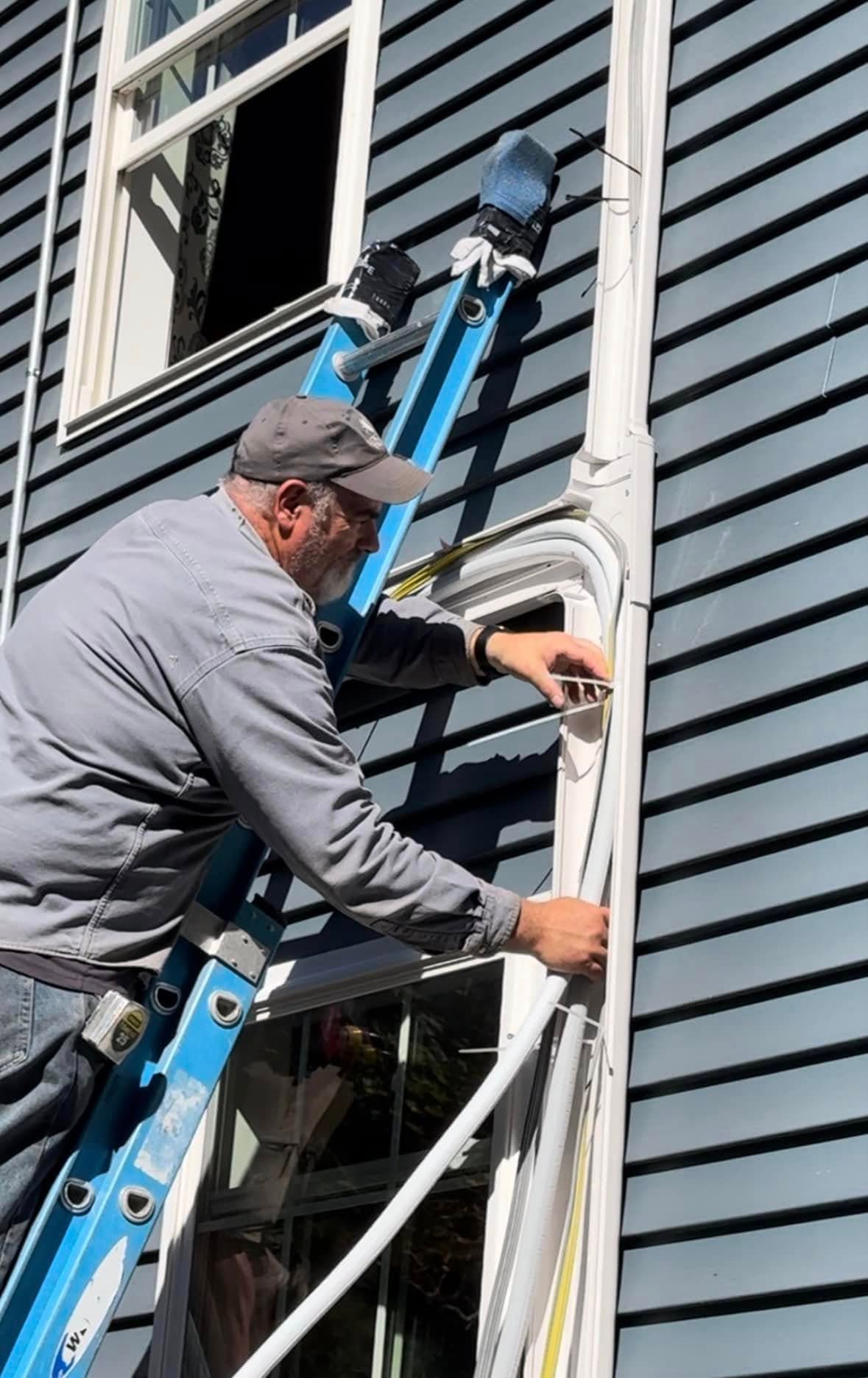
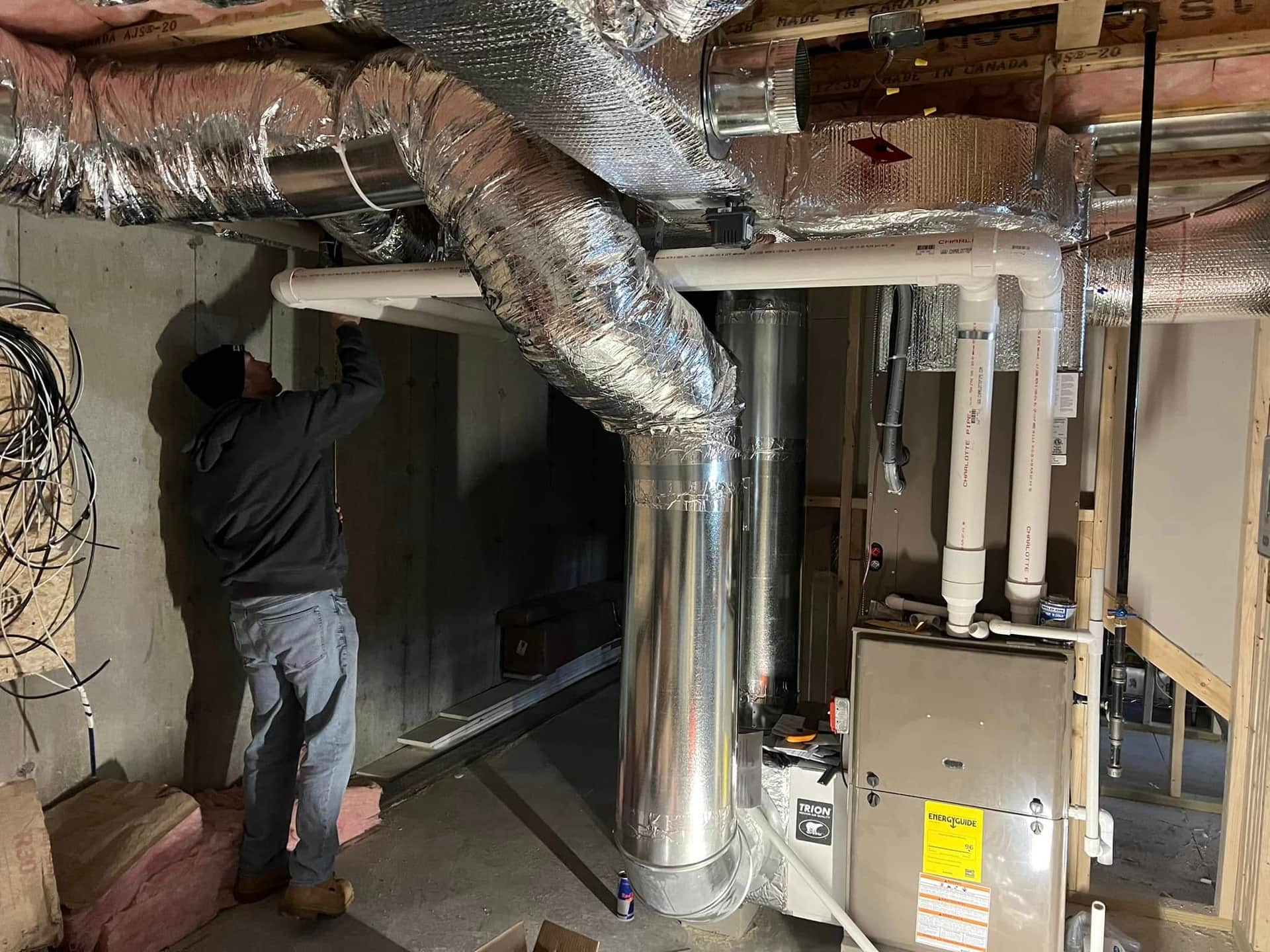
Our technicians install the ERV with dedicated ductwork, intake and exhaust ports, and controls integrated with your HVAC.
Balancing & Testing
We balance airflow, verify energy recovery performance, and test the system in all operating modes.
Owner Walkthrough
We explain filter maintenance, seasonal settings, and how your ERV works with your heat pump for optimal comfort and efficiency.
Why Sanford Homeowners Choose Us
Trusted across York County for expert ERV installation and exceptional service.
Healthier indoor air for your family
Recovers up to 80% of heating and cooling energy
Reduces condensation and mold risk
Works year-round in Maine's climate
Lowers overall HVAC operating costs
Quiet, continuous whole-home ventilation
Why Tighter Maine Homes Need Mechanical Ventilation
Air sealing and insulation upgrades that make a heat pump perform well also make a house hold onto stale indoor air longer — moisture, odors, and indoor pollutants that used to leak out through drafts now have nowhere to go. An energy or heat recovery ventilator solves that on purpose, bringing in fresh outdoor air without throwing away most of the heating or cooling already paid for.
Read the full guide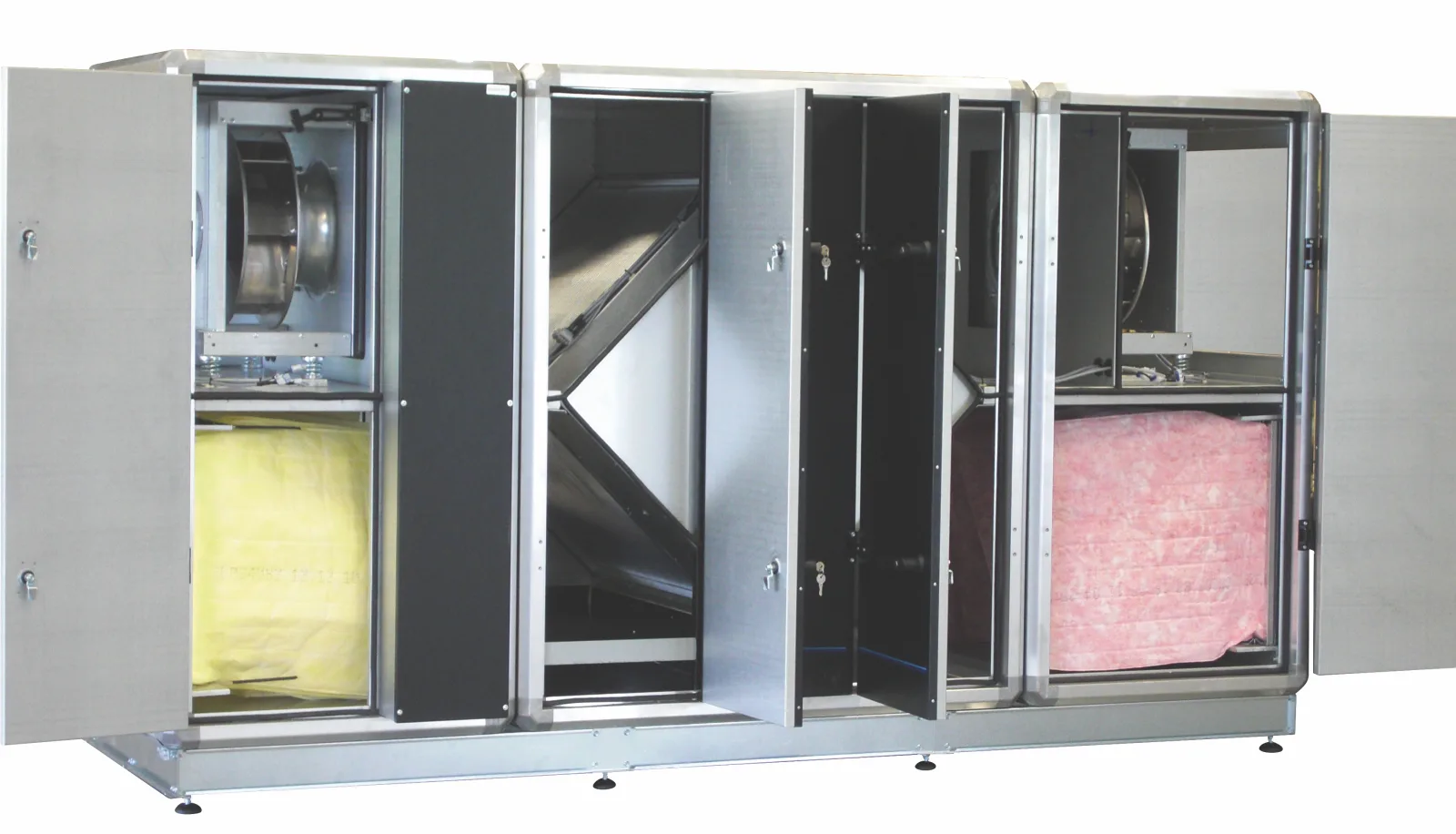
Efficiency Maine
Rebates & Guidance
- Rebate
Commercial ERV money is measured by the CFM
Efficiency Maine prices commercial energy recovery ventilator incentives against rated airflow and how efficiently the unit recovers heat: retrofit jobs pay $2.00 per CFM at 65–75% recovery efficiency and $2.50 per CFM once a unit clears 85%, while new-construction projects run $1.50 to $1.75 per CFM.
Source: Efficiency Maine - Recommendation
Rarely a stand-alone line item
Once a building or a home gets sealed and insulated well enough, fresh air stops arriving on its own through drafts — an ERV brings it back in deliberately, without giving away the heating or cooling that was already paid for. Most of the time it gets scoped as part of a broader heat pump project rather than ordered on its own.
Source: Efficiency Maine
Program details as of Sep 26, 2026. Rebate amounts and eligibility change; confirm current terms at efficiencymaine.com.
Getting to Know Sanford
Sanford was a farming town until British industrialist Thomas Goodall arrived around 1880 and built a textile, carpet and fabric mill empire that pulled the population from about 2,700 to over 9,000 by 1910. The city didn't take that name officially until 2013, when Sanford became Maine's newest city under a council-manager charter, decades after Goodall Mills itself closed and the workforce moved on to other trades.
That mill boom left Sanford with a genuinely mixed housing stock: nearly a quarter of homes predate 1940, but just as many were built after 1990 in newer subdivisions toward Springvale and South Sanford. About 63% of households still heat with oil, so a heat pump conversion here often means sizing a system for a dense mill-district double or triple-decker one week and a 1990s ranch the next.
Sanford ERV Air Exchange Systems FAQs
Does my Sanford home need an ERV?
If your Sanford home is newer or has been tightened up with insulation and air-sealing work, an ERV is often required by code and always improves indoor air quality by supplying continuous fresh air without the energy penalty of an open window.
Can an ERV be installed alongside an existing heat pump in Sanford?
Yes. ERVs pair naturally with heat pump systems in Sanford homes, handling fresh-air ventilation while the heat pump handles heating and cooling. The two systems work independently but complement each other well.
Does an ERV need its own electrical permit in Sanford?
Yes. An ERV's dedicated circuit is treated like any other permanently wired mechanical equipment in Sanford and requires an electrical permit, which we pull as part of the installation.
What Our Customers Say
Here's what homeowners across Southern Maine say about the work.
“Nate did a nice, professional job cleaning and servicing our heat pump. We recommend and will use them again.”

Justin Spear
August 2026
“I had neglected annual service out of fear that it would cost a fortune but when I called to make the appointment, they let me know what was included in service and the cost- amazing! I appreciated that they were willing to service the system even though they did not do the installation.”

Ben Winkler
April 2026
“I contacted Southern Maine Heat Pumps to service my two units. The technicians who came out to service our heat pumps did an outstanding job. They were very thorough and helpful. They did a way better job than what I have experienced before with other maintenance services.”

Matt Heer
March 2026
“The technician arrived right on time, diagnosed the issue quickly, and had both of my heat pumps running smoothly in no time. They explained everything clearly and didn’t try to upsell unnecessary services — just honest, quality work. The price was fair, and the customer service was exceptional.”

Sarah McKay
November 2025
“I was being serviced by another local company as I had a crack in my Daikin Drip Pan. The previous company came out 3 times and finally diagnosed it. They ordered the part and then never showed up again even though the part was under warranty. I found Southern Maine on a google search and gave them a call. Sam called my back immediately.”

Big Pappa
August 2025
“Steve and Nate do an amazing job. I have been using this company for 5 years for heat pump cleaning, highly recommended.”

Sandra McKinney
November 2025
More Heat Pump Services in Sanford
Nearby Communities We Serve
Ready for ERV Air Exchange Systems in Sanford?
Schedule your free in-home consultation today. We will assess your Sanford home, recommend the right system, and walk you through every rebate and financing option available.
Call us directly at (207) 317-1077 or fill out the form to get started.